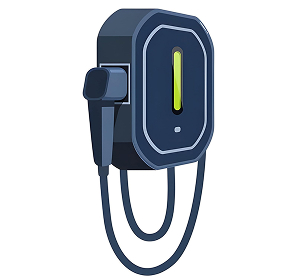
One of the most common questions we receive from Christchurch homeowners is: "Do I need a switchboard upgrade to install an EV charger?" The honest answer is: not always — and often not at all, thanks to modern Dynamic Load Balancing technology. But when an upgrade is genuinely required, we do it properly, safely, and at competitive prices.
Our EWRB-registered electricians assess your switchboard as part of every EV charger quote at no extra cost. If your board needs upgrading, we'll tell you why, what's involved, and exactly what it will cost — in a clear written quote before any work begins. If a DLB charger can avoid the upgrade entirely, we'll recommend that first.
We won't recommend a switchboard upgrade if a DLB charger can avoid it — it's the smarter and cheaper option in most cases.
The need for a switchboard upgrade before EV charger installation depends on several factors: the age and capacity of your current board, the size of your home's existing electrical load, and the type of EV charger you want to install. Here's what we look at during our assessment:
These indicators suggest your home may need a switchboard upgrade — or at minimum, a careful load assessment before we install your EV charger.
Christchurch homes built before 2000 often have switchboards designed for lower electrical loads — before heat pumps, electric vehicles, and high-powered appliances became common. Assessment is always recommended.
If your home still has a ceramic or rewirable fuse box rather than modern circuit breakers, it should be upgraded before any new high-load circuit is added. This is a safety and compliance issue, not just capacity.
If breakers trip occasionally under normal household load — especially during summer when heat pumps and cooking loads combine — your board is already close to its limits. Adding an EV charger without intervention will cause regular trips.
New Zealand's AS/NZS 3000 wiring rules require RCD (residual current device) protection for EV charger circuits. Older Christchurch boards often have main breakers only, with no RCDs — these need upgrading.
If every circuit position in your switchboard is already occupied, there's no room for a new dedicated EV circuit. A larger switchboard (or a sub-panel) is required before installation can proceed.
Send us a photo of your switchboard. We'll assess it remotely and let you know within 24 hours whether an upgrade is needed — or whether a DLB charger can solve the problem without one. Free, no obligation.
In the majority of Christchurch homes where a switchboard upgrade would otherwise be required, we instead recommend a Type 2 EV charger with Dynamic Load Balancing (DLB). This approach saves most homeowners $1,500–$2,500 in upgrade costs.
DLB works by installing a small CT (current transformer) clamp sensor on your mains at the switchboard. This sensor feeds real-time household load data to the EV charger. The charger automatically adjusts its charge rate — slowing down when household demand is high, speeding up when demand is low — so the total load on your switchboard never exceeds its safe capacity.
The result: your EV charges as fast as possible at any given moment, without risking overload. No upgrade required in most cases. The DLB charger costs slightly more than a basic charger, but far less than a switchboard upgrade.
When DLB can't avoid an upgrade: If your mains supply is genuinely undersized (below 63A), if your board has ceramic fuses, or if there are no circuit positions available, a switchboard upgrade may still be required even with DLB. We'll tell you honestly during your free assessment.
When a switchboard upgrade is genuinely required before EV charger installation, here's exactly what we do — and what's included in the price:
Peter and Helen's 1972 St Albans home had a ceramic rewirable fuse box — one of the last of its kind still in service in that area. The fuse box had 6 circuits, all occupied, with no RCD protection anywhere on the property. Their 63A mains supply was adequate, but the board itself had been at capacity for years. Over time they had added a heat pump, a new electric oven, and a dishwasher — and the old ceramic fuses would occasionally blow under high summer load. When they took delivery of a Kia EV6, it was immediately clear that a switchboard upgrade was unavoidable before any EV charger could be safely or legally installed. Unlike most Christchurch homes where DLB avoids upgrade work entirely, a ceramic fuse box with no RCDs left no alternative — a full board replacement was the only compliant path forward.
We replaced the ceramic fuse box in its entirety with a modern 12-way consumer unit fitted with dual RCD protection and individual MCBs for every circuit. All existing circuits were re-terminated to the new board — heat pumps, oven, hot water, lighting, and power — and a new dedicated 32A circuit was added for the EV charger. Because the mains supply was already adequate at 63A single-phase, no supply upgrade was needed; only the board itself required replacement. The Wallbox Pulsar Plus 7.4kW was mounted on the exterior garage wall and wired back to the new dedicated breaker. Everything — switchboard replacement, EV charger installation, all testing, and a full thermal inspection of the existing circuits — was completed in a single day. A Certificate of Compliance covering both the switchboard upgrade and the EV charger installation was issued before we left the site.
Peter and Helen's Kia EV6 GT-Line charges overnight on the Wallbox Pulsar Plus and wakes up full every morning. At 7.4kW, the 77.4kWh battery reaches capacity in approximately 10.5 hours — well within a standard overnight window. The ceramic fuse-blowing episodes that had been a recurring inconvenience under summer loads are gone entirely; the new MCBs trip cleanly and reset instantly if needed. The dual RCD protection now covers every circuit in the house, which their insurer confirmed is reflected positively in their home policy. Helen notes that the Certificate of Compliance was the document she was most relieved to have — proof that all work was done to code and that the electrics were safe. In retrospect, Peter considers the switchboard upgrade one of the best improvements they have made to the house: the EV charger was the trigger, but the safety and capacity benefits extend well beyond it.
"We knew the old fuse box had to go eventually — the EV was the final push we needed. The whole job was done in a day, everything was explained clearly, and the CoC meant our insurance was happy. We feel much better about the safety of our home's electrics now." — Helen S., St Albans, Christchurch


We install residential EV chargers across Christchurch, Banks Peninsula, and North Canterbury. Select a letter to find your suburb.