Your EV charger installation in Hornby should be something you can plan around — not an open-ended job where costs turn up on the day. We lock in every number upfront, complete the full scope in a single visit, and issue a Certificate of Compliance on-site before we head off.
For most Hornby homes, first contact to first charge takes less than one week. We carry out our assessment from photos you send us, which means no waiting around for a tradesperson to arrive before the job even starts.
Enquiry to first charge — typically less than one week
Our base on Treffers Road sits on Hornby's doorstep, which makes these some of the easiest jobs on our board to schedule — we can often fit a Hornby installation around other work at short notice. The suburb's housing is a real mix: 1960s and 70s weatherboard and brick homes around Hornby High and Kyle Park, newer infill townhouses, and post-2010 builds towards Wigram and Awatea.
The older homes are where local knowledge pays. Many still run original or lightly-upgraded switchboards, and the wrong approach is an automatic $2,000 board upgrade quote. Our first option is always a charger with dynamic load balancing, which manages the load within your board's existing capacity — most Hornby installs proceed without any switchboard work. Where an upgrade genuinely is needed, it is itemised in writing before you commit.
The fixed price is exactly that — fixed. Here's every item included in every installation, with no exceptions:
If we're supplying the charger unit, it forms part of your quoted price. We match the model — Evnex, Wallbox, Zappi, Tesla Wall Connector, or Smart EV Charger — to your EV and home setup before ordering.
A new dedicated 32A circuit runs from your consumer unit to the charger — properly sized cable, conduit where required, junction boxes, and a new MCB at the board. Your EV circuit is completely independent of existing household wiring.
The charger is mounted at the right height and all internal connections are terminated to manufacturer spec. Cable entries are sealed and outdoor or semi-exposed positions receive IP-rated weatherproofing.
Where DLB is specified, we clip the CT clamp to the mains feed inside your switchboard, pair it with the charger, and set appropriate thresholds. From that point, the charger self-manages — reducing output whenever other household loads demand it.
Network connection, app install, and off-peak schedule setup are all part of the job. We set up the manufacturer app on your phone, connect the charger to your WiFi, and configure overnight scheduling to suit your electricity plan.
Under the NZ Electricity Act 1992, a Certificate of Compliance is mandatory for all new electrical work including EV charger installations. We prepare and issue one on-site for every job, with a digital copy emailed the same day.
We can quote from photos because we assess the factors that actually matter. Here are the four things we look at in your images and why each one matters for your installation:
We evaluate your consumer unit's rated capacity, the number of available circuit slots, and the existing household load. Most Hornby homes built since the mid-1990s have adequate capacity for a 7.4kW charger, especially when paired with DLB. Any required upgrades are costed transparently in your quote.
The route from your switchboard to the charger determines the cable size and the total materials bill. We base the quote on the real measured run for your Hornby property, not a generic allowance.
We look at wall construction (timber framing, masonry, or cavity brick), the cable entry route, and weatherproofing requirements. This determines whether a standard mount suffices or additional fixings and sealing are needed — all worked out before we arrive.
Connector type (Type 2 or Type 1), the vehicle's onboard charging limit, and whether solar is part of the picture all influence the charger selection. We check compatibility before recommending a model, so the unit quoted is the right one for your Hornby home and vehicle.
This is how a standard Hornby installation day runs. Times shift with cable route and switchboard complexity — most jobs are done inside 3–6 hours.
Charger selection depends on your EV connector type, your board's capacity, and your solar setup if any. We work through this in the photo assessment — this is the overview:
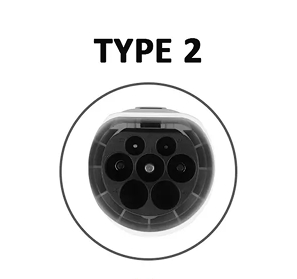
Chosen by most Hornby homeowners. The 7.4kW Type 2 with DLB is compatible with every current EV sold in New Zealand, works within most standard switchboards, and enables scheduling to the cheapest overnight window on your electricity plan.
Works with: Tesla, BYD, Hyundai, Kia, MG, BMW, Audi, VW, Volvo, Mercedes, Polestar, and all new-market NZ EVs.
Learn more about Type 2Required for Japanese-market vehicles with a J1772 inlet. Level 2 Type 1 charging is three to four times faster than a standard wall socket, which makes a material difference for Leaf owners and PHEV drivers using their vehicle every day.
Suits: Nissan Leaf (all generations), Mitsubishi Outlander PHEV, Nissan e-NV200, and other J1772 vehicles.
Learn more about Type 1If you have solar at your Hornby home, a solar-integrated charger like the Zappi, Evnex E2 Plus, or Smart EV Charger channels surplus generation directly into your EV, reducing or eliminating your effective charging cost on good solar days.
Ideal for: Homes with existing solar panels looking to maximise self-consumption and lower running costs.
Learn more about Solar & EVFor most Hornby homes, the answer is no. If your property does need an upgrade, you'll find it clearly priced in the written quote — nothing is introduced as a surprise on installation day.
Consumer units installed in most Hornby homes from the 1990s onwards have the capacity to support a 7.4kW EV charger. DLB provides a further layer of protection, automatically reducing charger output in real time if household draw climbs toward the board's limit.
Switchboard upgrades are required in a genuine minority of jobs — primarily older fuse-board installations or homes with limited mains capacity. Where needed, the upgrade is scoped, priced, and completed on the same day as the charger installation.
Switchboard Upgrade InfoThe most common questions from Hornby homeowners before they book — answered directly.
We install home EV chargers right across Christchurch, Selwyn, Waimakariri and Banks Peninsula. These are our main service areas — if your suburb isn’t listed, we almost certainly still cover it.
Don’t see your area? We service every Christchurch suburb and most of Canterbury — get in touch or browse EV chargers across Christchurch.
Every price below includes the charger unit, our flat $875 incl. GST installation (cable runs up to 10m), and a Certificate of Compliance.
| Charger | Total Installed (incl. GST) |
|---|---|
| Smart EV Charger 7.4kW — Socket | $1,674–$1,725 |
| Smart EV Charger 7.2kW — Cable | $1,655 |
| Evnex E2 Flex | $1,674 |
| Tesla Wall Connector | ~$1,675 |
| Evnex E2 Core | $1,974 |
| TeltoCharge 7.4kW | $2,245 |
| Wallbox Pulsar Plus | $2,250–$2,570 |
| Evnex E2 Plus | $2,274 |
| Zappi (myenergi) | from $2,420 |
| Evnex X7 | $2,470 |
| Evnex X22 | $2,574 |
| Wallbox Pulsar Max | $2,870 |
| You provide your own charger | $875 install only |
Charger prices are indicative and may vary with supplier pricing. See full pricing details →